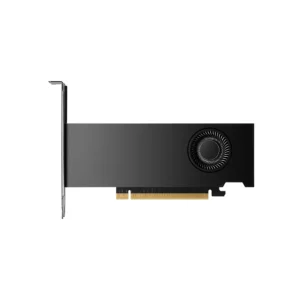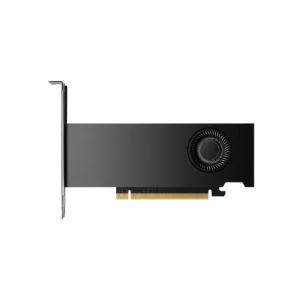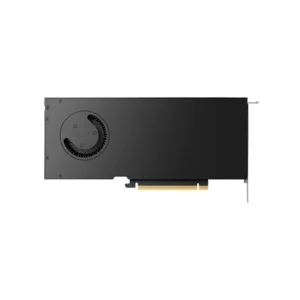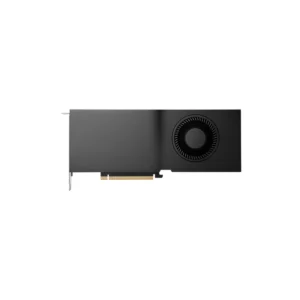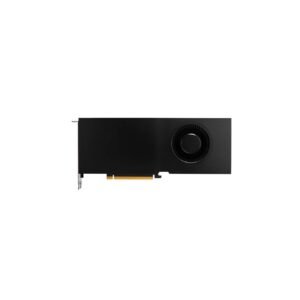















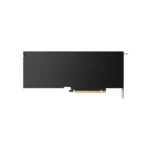
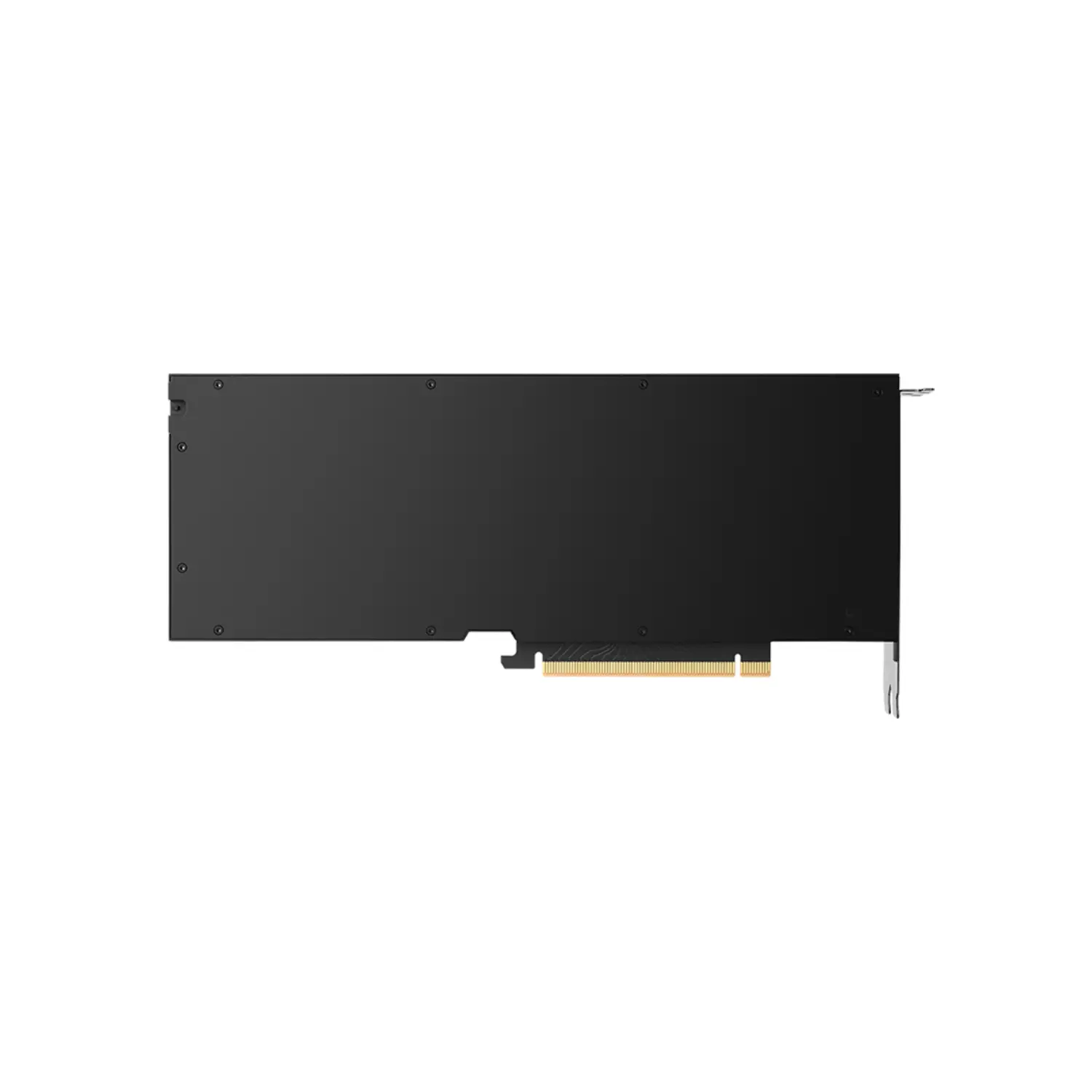
PNY Nvidia RTX 4500 Ada Generation 24GB GDDR6 Graphics Card
- NVIDIA Ada Lovelace Architecture
- 4 nm NVIDIA Custom Process
- 35.8 billion Transistors
- 240 NVIDIA Tensor Cores
- 24 GB GDDR6 with ECC GPU Memory
- Max Power Consumption 210W
Free Shipping
Zero delivery charges, maximum convenience.

If You Have Any Query,
Please Contact Us
Our Sales Specialist
Name: Anjalina
Physical Store Available
100% Genuine
24/7 Support
Description
NVIDIA Ada Lovelace Architecture
Experience fast, interactive performance—powered by the latest NVIDIA Ada Lovelace architecture-based GPU—with ultra-fast, onboard graphics memory technology and optimized software drivers for professional applications. The Shader Execution Reordering (SER) system allows on-the-fly organization and reordering of workloads, grouping similar performing threads so the streaming multiprocessor (SM) and RT Core can operate more efficiently.
CUDA Cores
The NVIDIA Ada Lovelace architecture-based CUDA® cores provide up to 2X the single-precision floating-point (FP32) throughput compared to the previous generation, providing significant performance improvements for graphics workflows such as 3D modeling and compute for workloads such as CAE.
Third-Generation RT Cores
Third-generation RT Cores provide up to 2X the throughput of the previous generation and the ability to run ray tracing with either shading or denoising capabilities concurrently. This accelerates renders for M&E content creation, AECO design evaluations, and manufacturing virtual prototyping. Third-generation RT Cores deliver up to 2X the ray-tracing performance over the previous generation, delivering groundbreaking performance for photorealistic rendering. Enhanced RT Cores combined with new SER technology dynamically reorder inefficient workloads, dramatically improving shader performance to accelerate end-to-end ray-traced image rendering performance.
Fourth-Generation Tensor Cores
Fourth-generation Tensor Cores provide up to 4X faster AI training performance than the previous generation with FP16 precision. Support for the new FP8 data format for inference provides more than 4X faster performance than the previous generation and reduces data memory usage by half (compared to the FP16 data format).
Encode and Decode Engines
RTX 4500 includes two video encode engines and two decode engines, including support for the AV1 video format and the performance required for multi-stream video applications for security and video serving.
PCIe Gen 4
RTX 4500 supports PCIe Gen4, which doubles the bandwidth of PCIe Gen3 from 15.75GB/s to 31.5GB/s for x16 connections, improving data transfer speeds from CPU memory for data-intensive tasks such as AI, data science, and creating large 3D models and scenes. Faster PCIe performance also accelerates GPU DMA transfers, providing faster video data transfers from GPUDirect for Video-enabled devices and faster IO with GPUDirect Storage.
GPU Memory
RTX 4500 features 24GB of GDDR6 memory, providing the memory needed for rendering, data science, engineering simulation, and other GPU memory-intensive applications. With greater memory bandwidth than the previous generation, RTX 4500 can move data between the GPU and GPU memory faster, resulting in better graphics, compute, and rendering performance.
Multi-Display
Four mini-DisplayPort 1.4a connectors, support for multiple 8K monitors, NVIDIA Quadro Sync, Mosaic, and Warp and Blend enable massive immersive environments for CAVE, video walls, and location-based entertainment deployments.
Extended Reality
Support for the latest high-resolution HMD devices, high-performance graphics, and 20GB of GPU memory enable the creation of AR and VR experiences for training, product validations, building walkthroughs, and compelling entertainment.
Form Factor and Power Efficiency
With a single-slot, low-profile form factor, and power-efficient design, RTX 4000 fits into a wide range of workstation chassis, providing professionals with a generous selection of compatible workstations from worldwide OEM vendors and delivering a groundbreaking GPU architecture for AI and AI-based neural graphics in desktop workstations.
Motion BVH
Hardware-accelerated rendering of motion blur—a common cinematic effect that’s difficult to render—means artists no longer need to rely on traditional methods of using motion vectors to achieve motion blur. Motion vectors allow the artist to adjust motion blur in post but require visual fixes for reflections and translucency.
NVIDIA DLSS 3.0
The Ada Lovelace GPU architecture features a new Optical Flow Accelerator and AI-based DLSS Super Resolution with DL denoiser that boost DLSS 3.0’s frame rates up to 4X compared to the previous version while maintaining or exceeding native image quality.
| Architecture | NVIDIA Ada Lovelace Architecture |
| Foundry | TSMC |
| Process Size | 4 nm NVIDIA Custom Process |
| Transistors | 35.8 billion |
| Die Size | 294.5 mm2 |
| CUDA Parallel Processing Cores | 7,680 |
| NVIDIA Tensor Cores | 240 |
| NVIDIA RT Cores | 60 |
| Single-Precision Performance | 39.9 TFLOPS |
| RT Core Performance | 92.2 TFLOPS |
| Tensor Performance | 637.8 TFLOPS |
| GPU Memory | 24 GB GDDR6 with ECC |
| Memory Interface | 192-bit |
| Memory Bandwidth | 432 GB/s |
| Max Power Consumption | 210W |
| Graphics Bus | PCI Express 4.0 x16 |
| Display Connectors | DP 1.4a (4) |
| Form Factor | 4.4″ (H) x 10.5″(L) Dual Slot |
| Product Weight | 1079.7g |
| Thermal Solution | Blower Active Fan |
| NVIDIA 3D Vision and 3D Vision Pro | Support via 3-pin mini DIN |
| Frame Lock | Compatible (with Quadro Sync II) |
| NVLink | Not Supported |
| NVENC | NVDEC | 2x | 2x (+AV1 Encode & Decode) |